
Search Indiana Traffic Court Records
Indiana traffic court records are kept at the county level across all 92 of the state's counties. When police issue a traffic ticket in Indiana, that citation becomes a court record held by the Circuit or Superior Court Clerk in that county. You can search these records online using Indiana's free MyCase portal, check your case status by citation or name, and pay fines through the state's ePay system. This guide covers the main ways to find and access Indiana traffic court records, from statewide online tools to local courthouse contacts.
Indiana Traffic Court Records Quick Facts
How to Search Indiana Traffic Court Records
Indiana connects almost all of its 92 counties through a single case management platform called Odyssey. The public-facing search tool built on that system is called MyCase. You can reach it at public.courts.in.gov/mycase. The search is free. No account is needed to look up basic case data on Indiana traffic court records. Once you find your case, you can see the charge type, hearing dates, current status, and whether any fines have been paid.
The screenshot below is from the Indiana MyCase portal, the statewide case search system used by most Indiana courts for traffic and civil case records.
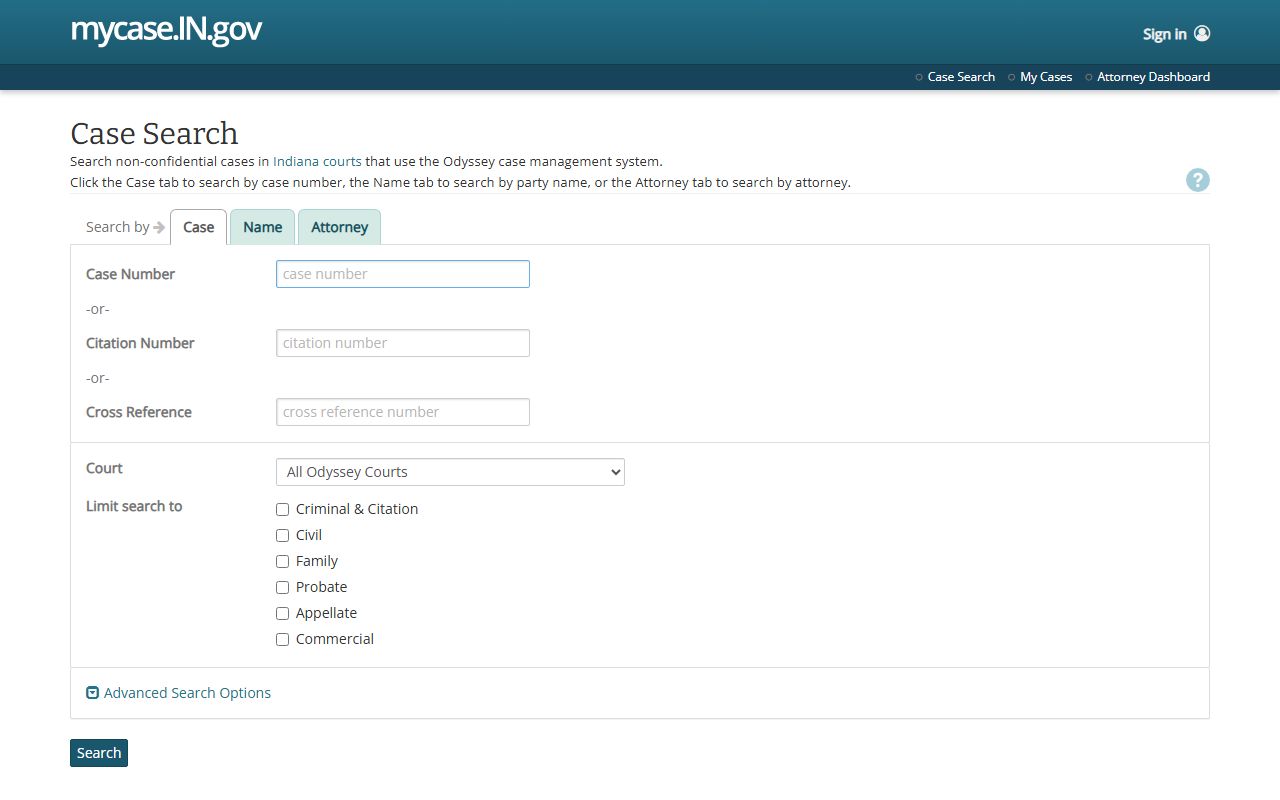
MyCase updates as clerks process new citations, usually within a few days of the ticket being issued.
When you search, enter your full name, a case number, or the UTT (Uniform Traffic Ticket) number printed on your citation. The system supports wildcard searches and Soundex matching, so a misspelling rarely blocks you from finding a record. If your ticket does not appear right away, wait five to fourteen days. Officers file citation data after the fact, and some courts take longer to process new cases. The Indiana Judicial Branch courts directory lists every county court and its clerk contact info if you want to call and confirm your case is in the system.
You can also search MyCase from any device with internet access. The portal works on mobile phones and tablets. Once you find your record, MyCase links directly to the ePay system if your court is eligible for online payment. Attorney users can log in with a separate account to see full docket information, financial history, and case documents that are not visible in the standard public search.
The Odyssey Case Management System page from the Indiana Supreme Court explains how counties connect to this platform and how the data flows between courts, the BMV, and other state systems.
The MyCase system gives both the public and attorneys a consistent way to access Indiana court records from any county in the state.
Pay a Traffic Ticket in Indiana
Indiana gives you several ways to pay a traffic ticket. The online ePay portal at public.courts.in.gov/pay is the most widely used option. It accepts Visa, MasterCard, and Discover. You search by your name and date of birth or by the UTT number on your ticket. A service fee of about 3% applies to card payments. Some counties add a flat $4.00 transaction fee on top of the percentage. Marion County residents can also pay online at indy.gov/activity/pay-traffic-ticket, which uses your name, date of birth, or ticket number.
The portal below shows Indiana's ePay system, the statewide payment tool for traffic tickets, court costs, and infraction fines across participating Indiana counties.
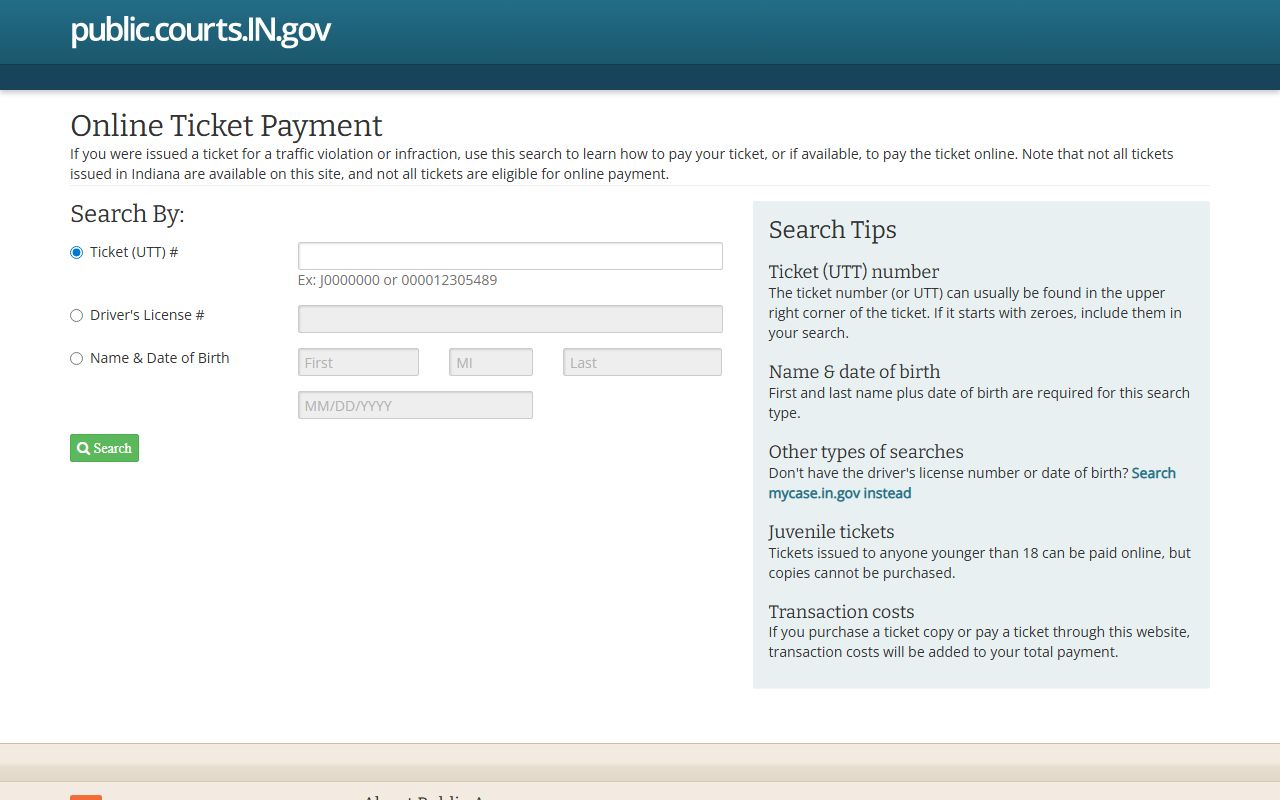
Most Indiana courts participate in the ePay system, making it easy to pay from home without visiting a courthouse.
Common payment methods accepted across Indiana courts include:
- Online via ePay at public.courts.in.gov/pay (credit or debit card, ~3% fee)
- In-person with cash, money order, or credit card at the county clerk's office
- By mail using a money order or cashier's check (no personal checks)
- By phone at some counties with automated payment lines
Note: Wait at least five to fourteen days after getting a ticket before paying online. Courts need that time to enter your citation into the system.
Indiana Traffic Court Deferral Programs
Most Indiana counties offer an infraction deferral program. This lets you pay a fee to the county Prosecutor's Office instead of paying the ticket fine and having the violation recorded against your driving record. You agree to stay violation-free for a set period, usually six months. If you hold up your end, the ticket is dismissed and nothing is reported to the Indiana Bureau of Motor Vehicles.
Fees for deferral programs vary by county and violation type. Moving violations generally cost between $192.50 and $252.50. Elkhart County, for example, charges $252.50 for moving infractions and $92.50 for non-moving ones. Clark County's deferral fee is $192.50. Boone County notes that most traffic violations qualify for a six-month deferral. Contact the Prosecutor's Office in your county to confirm the current fee and process. Email is an option in some counties, such as Boone County, which accepts deferral inquiries at BCPOTRAFFIC@CO.BOONE.IN.US.
Not every driver or violation qualifies. CDL (commercial driver's license) holders are excluded in nearly every county. Prior deferral use within the past one to two years is a common disqualifier. Violations that typically do not qualify include speeding 25 mph or more over the limit, violations in school or construction zones, passing a stopped school bus, and operating while intoxicated. Each county's Prosecutor decides eligibility based on local rules, so what works in one county may not apply in another. Always check before you pay your ticket, because paying is often treated as a guilty plea, which closes the deferral door.
Indiana Courts and the Traffic Ticket Process
Traffic infractions in Indiana are civil violations, not criminal ones. Under Indiana Code Title 34, infractions carry fines and can affect your driving record, but they do not result in a criminal conviction. More serious traffic offenses, such as operating while intoxicated, reckless driving causing injury, or leaving the scene of an accident, are charged as misdemeanors or felonies under Indiana Code Title 9, which governs motor vehicles and traffic regulations. Those cases appear as criminal records and carry much heavier penalties.
The page below from in.gov/courts/admin/tech/odyssey shows how the Odyssey system connects Indiana's courts, the BMV, and the statewide citation database for traffic records.
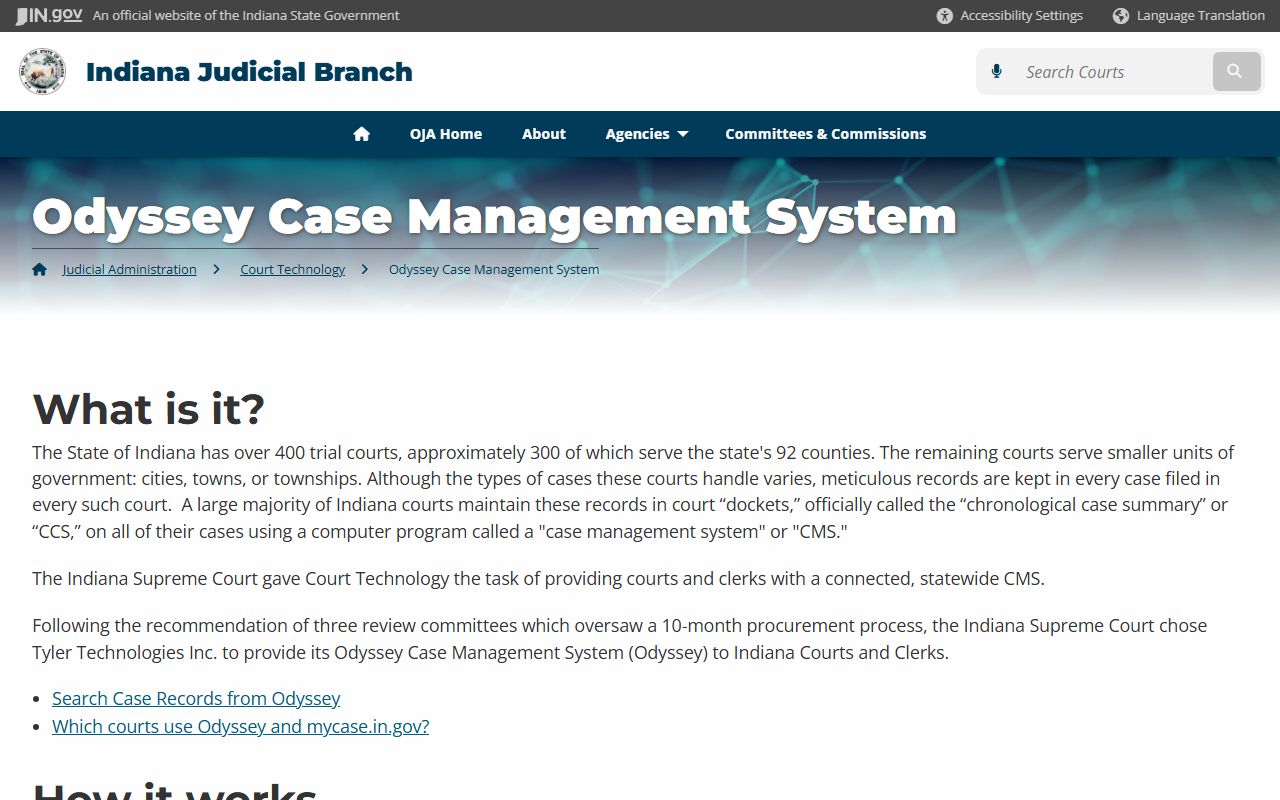
Odyssey covers most of Indiana's 92 counties and links court traffic records to BMV driving history automatically.
Each Indiana county has its own court structure. Most counties operate at least a Circuit Court and one or more Superior Courts. Traffic infraction cases typically land in Superior Court. In counties like Marion, traffic is handled by the Traffic Division at the Community Justice Campus in Indianapolis. In counties like Marshall, Superior Court No. 2 functions as a dedicated traffic court. Some cities in Indiana also have their own city courts or town courts that handle local ordinance violations and minor traffic infractions separate from the county system.
The Odyssey system also interfaces with the Indiana BMV. When a ticket is resolved and a conviction is recorded, the BMV receives the update. That is how points end up on your license. The BMV uses those points to track driver risk. CDL holders face tighter rules because certain violations are reported regardless of the outcome in county court, which is why CDL drivers are excluded from almost all deferral programs in Indiana.
Below is an example from the Odyssey information page showing the technology platform Indiana courts use to manage and share traffic case records statewide.
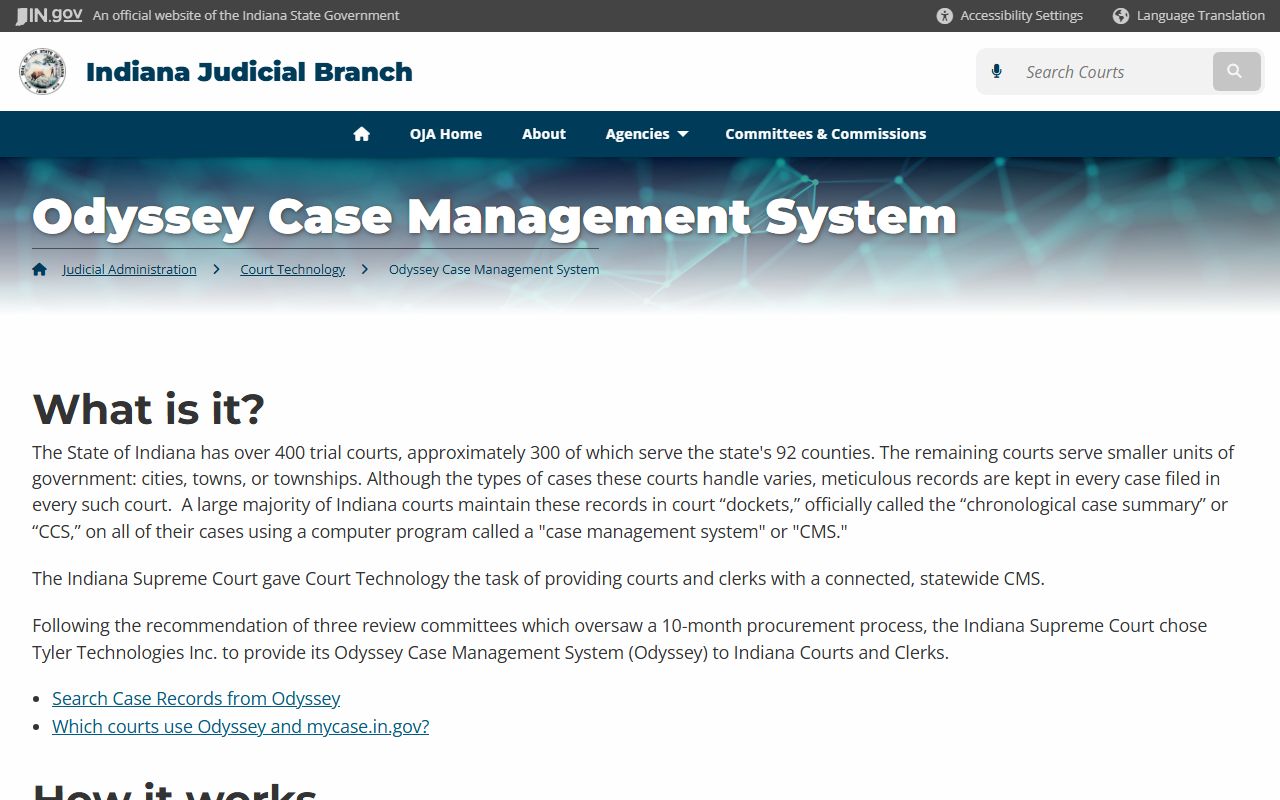
The Odyssey system is deployed at no cost to Indiana's counties, making it the standard platform for traffic court record management across the state.
Traffic Court Records and Indiana Law
Indiana law gives the public the right to view most court records, including traffic court files. That is why the MyCase portal is open and free. You do not have to be a party in a case to search it. Most traffic infraction records are public unless a judge has ordered them sealed, which is rare for routine moving violations. The Indiana Access to Public Records Act covers documents held by courts and government agencies at every level.
The screenshot below is from the Indiana Courts public records page, which explains what records are open to the public and how to access or request certified copies of court documents.
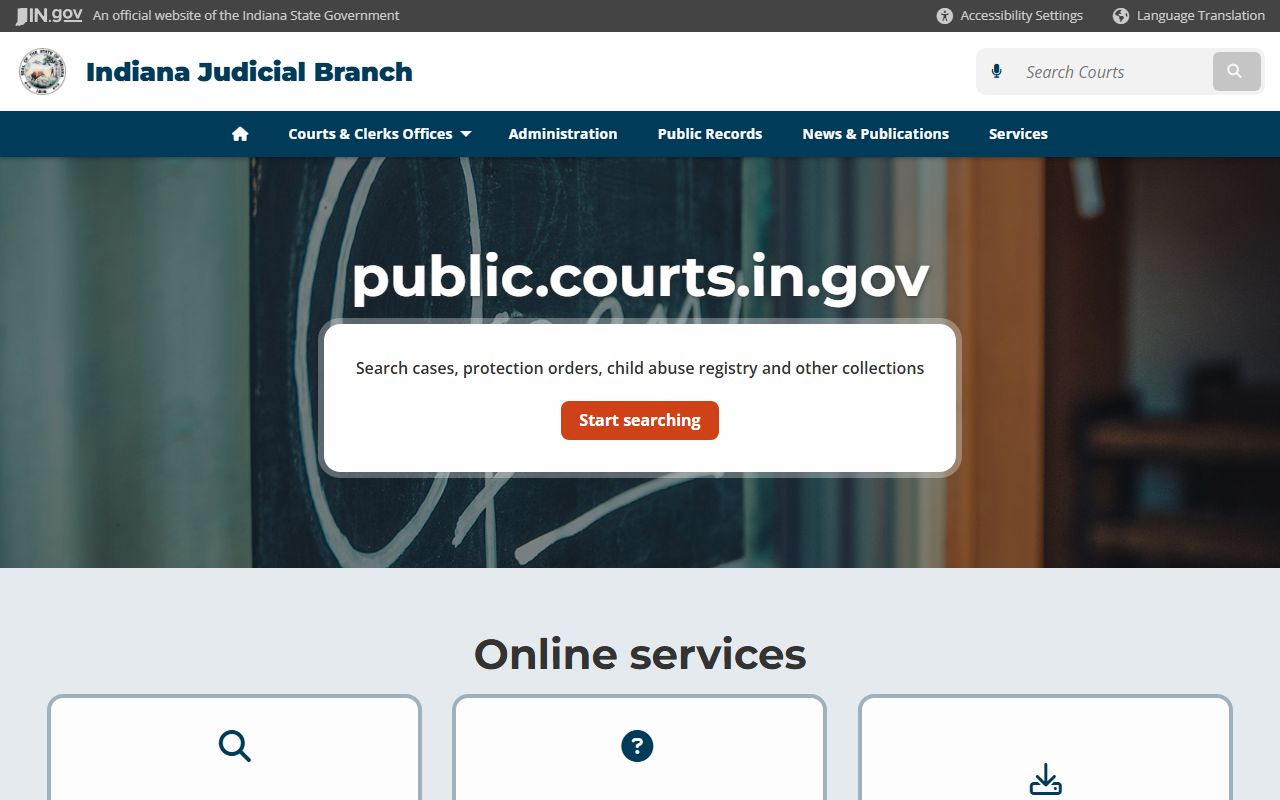
The Indiana Courts public records page covers access rules, certified copy fees, and how to request records from any of the state's 92 county courts.
Indiana uses a points system for driving record violations. The Indiana Bureau of Motor Vehicles at in.gov/bmv tracks points after traffic convictions. Common violations carry two to eight points depending on the offense. Accumulate too many and your license can be suspended. A completed deferral program prevents the conviction from reaching the BMV at all. That is the main practical benefit of deferral for most Indiana drivers who qualify.
If you cannot afford a fine, the Indiana Courts self-service center has guides for people who want to request a payment plan or challenge a ticket. Indiana Legal Help provides free legal resources and self-help forms, including forms related to driving suspensions and expungements. Some county clerks can also point you toward a hardship process, though that varies by court.
Below is another view from the Indiana Courts public records section, which also covers certified copy requests and fees for people who need official documentation of a traffic case outcome.
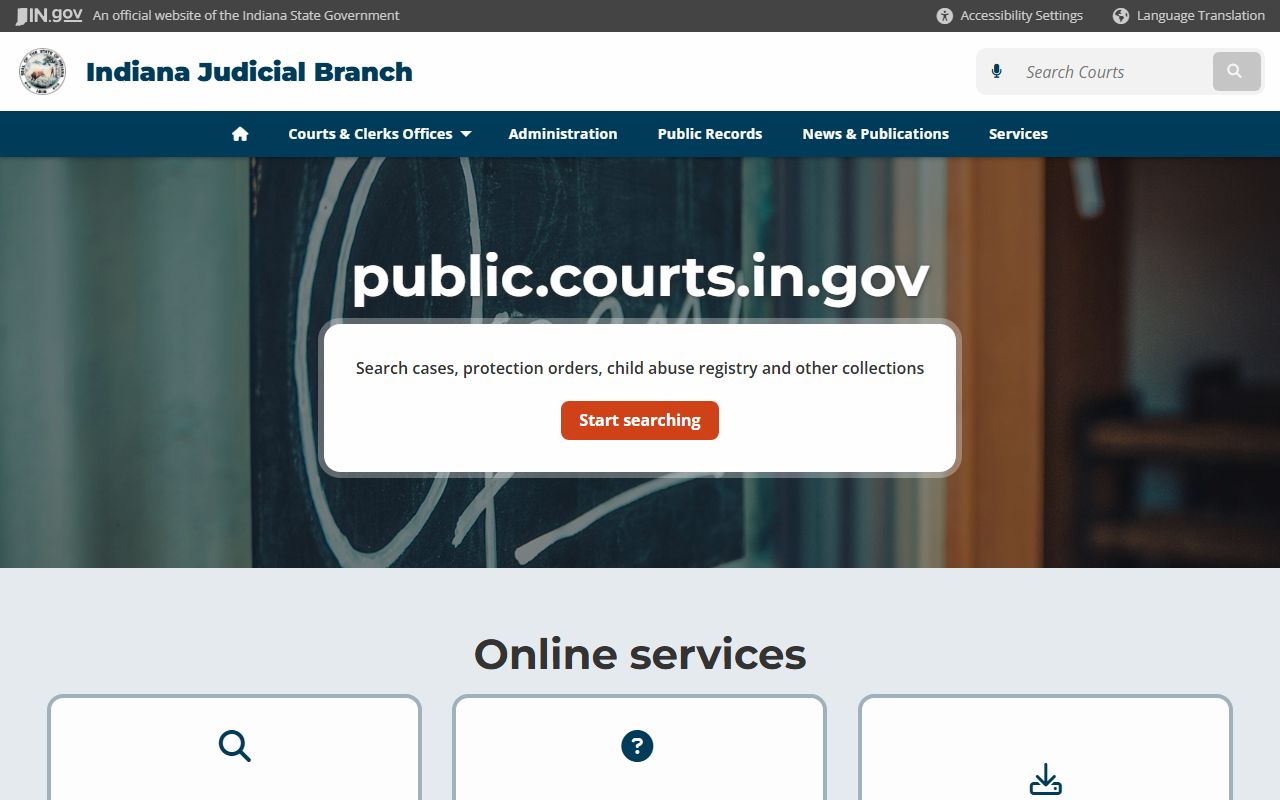
Certified copies of traffic court records are available from the county clerk that handled the case and are often needed for insurance, legal proceedings, or license reinstatement purposes.
Browse Indiana Traffic Court Records by County
Each of Indiana's 92 counties has its own Circuit or Superior Court Clerk who handles traffic court records. Pick a county below to find local contact info, payment options, and resources for traffic records in that area.
Traffic Court Records in Major Indiana Cities
Residents of major Indiana cities handle traffic tickets through their county court system or a local city court. Pick a city below to find specific court contacts and payment info for your area.